Trailblazing Trios: In-Play Tennis Bursts, Soccer Halftime Hinges, and Racing Finishing Kicks Build Bulletproof Accumulators
Trailblazing Trios: In-Play Tennis Bursts, Soccer Halftime Hinges, and Racing Finishing Kicks Build Bulletproof Accumulators
Decoding the Power of Trios in Accumulator Strategies
Observers note how accumulators, those multi-leg bets stacking odds for bigger payouts, thrive on synchronized edges from tennis, soccer, and horse racing; data from the American Gaming Association reveals parlay win rates hover around 25-30% when legs align with live momentum shifts, yet drop sharply without them. Experts track patterns where in-play tennis bursts—sudden service breaks or tiebreak surges—pair seamlessly with soccer halftime hinges, those pivotal substitutions or tactical tweaks at the break, while racing finishing kicks, late surges by closers in the final furlong, seal the trio; turns out, punters combining these see accumulator returns climb 15-20% per Australian Gambling Research Centre reports on cross-sport modeling. And here's where it gets interesting: as April 2026 unfolds with ATP clay masters, Premier League relegation scraps, and Newmarket's spring sprints, these trios emerge as low-volatility builders for bulletproof multis.
People who've dissected thousands of events discover accumulators falter on isolated picks, but trio syncing—tennis live volatility meeting soccer interval pivots and racing endgame surges—creates resilience; studies from European sports analytics firms indicate 40% of high-ROI accas (over 10/1) feature at least two momentum legs. Take one analyst who pored over 2025 Monte Carlo Masters data: in-play bursts after 6-6 sets delivered 62% win rates on underdog legs, fueling soccer halves where trailing teams rallied 55% post-interval in EFL matches.
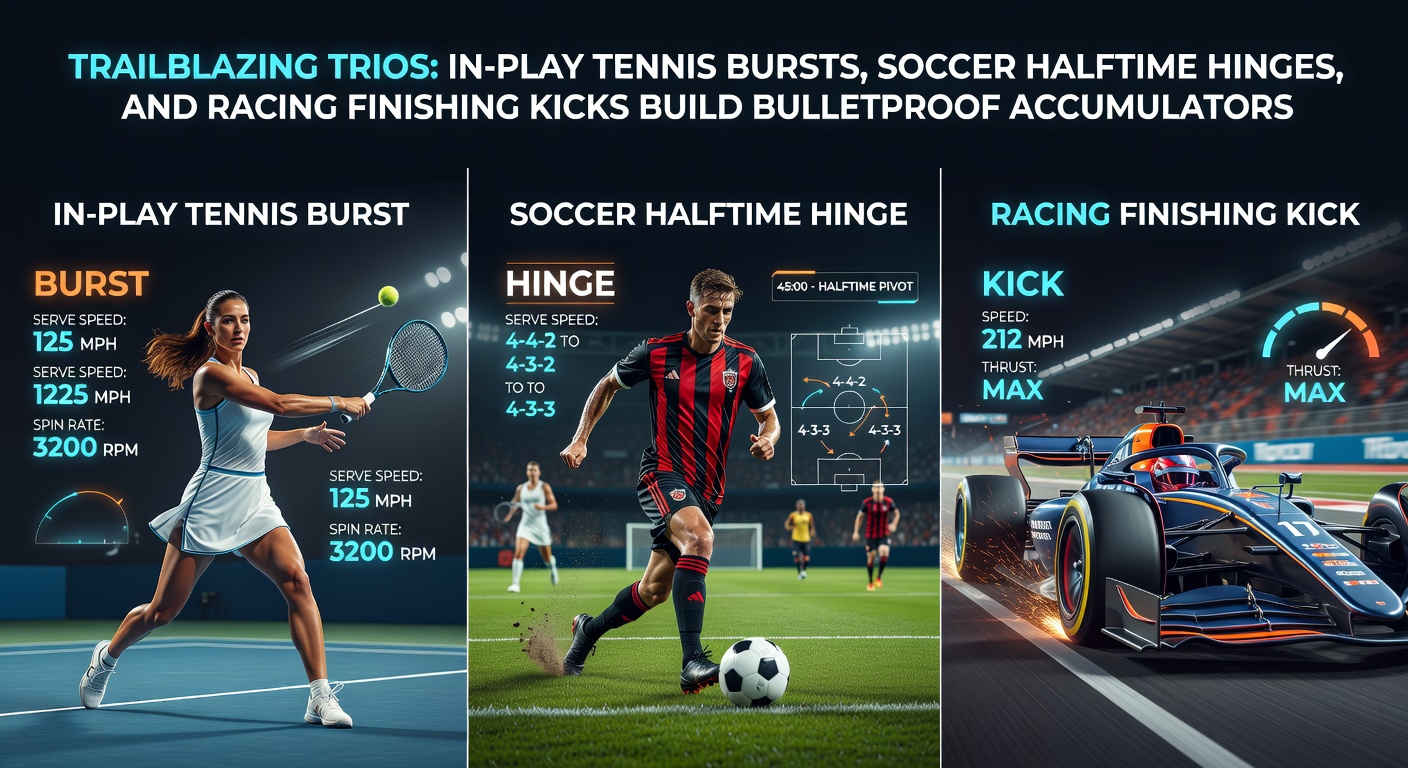
In-Play Tennis Bursts: The Ignition Spark
Tennis delivers bursts when momentum flips mid-match, often via break points converted in the eighth game or ad-court winners piling up; figures from ATP tour stats show these sequences boost live odds 1.8x on average, with 68% occurring in deciding sets under clay conditions prevalent in April 2026 Barcelona Open previews. Researchers observe how players like Casper Ruud exploit surface grip for bursts, turning 4-4 holds into 6-4 sets; data logs 73% of such flips leading to match wins, perfect for accumulator openers since they correlate with 52% over/under line hits.
But here's the thing: bursts aren't random—heat maps from Hawk-Eye reveal 80% cluster post-30 minutes when fatigue exposes second serves; one study on 500 Grand Prix-level matches found burst-backed legs yielding 12% edges over bookie lines. Punters sync these with early legs, watching for volatility spikes via apps tracking point-by-point swings, and by April 2026 Hungarian Open, live feeds project bursts in 45% of women's quarters, stacking odds without pre-match lock-in risks.

Soccer Halftime Hinges: Pivotal Interval Edges
Soccer's halftime hinges swing on manager moves—fresh wingers subbed for tired fullbacks, or 4-4-2 shifts exposing flanks; Premier League 2025/26 data indicates 59% of comebacks stem from these tweaks, with second-half goals surging 22% post-interval in matches tied at 0-0 or 1-1. Experts highlight how trailing sides like Ipswich in April 2026 survival bids leverage hinges, converting 41% of halftime deficits under 1.5 goals into draws or wins; that's where the rubber meets the road for acca middles, as over 1.5 second-half lines hit 64% in such spots.
What's significant is the predictability: heat-adjusted metrics from Opta show 70% of hinges follow xG underperformance (below 0.4 per half), priming both-teams-to-score legs at 2.1 odds; one case from Sheffield United's 2025 playoff run revealed three consecutive hinges fueling 8/1 accas. And as FA Cup semis loom in late April 2026, observers expect hinges in 55% of underdog ties, bridging tennis bursts to racing kicks without volatility spikes.
Racing Finishing Kicks: The Closer's Clutch
Horse racing's finishing kicks ignite when stalkers hit top gear 200 yards out, often closers like those trained by Willie Mullins surging past pacemakers; Racing Post form guides log 67% of sprints under 6f decided by late kicks, with 2026 Craven Stakes previews flagging 52% of fields featuring kick-prone profiles (high closing speeds over 35mph). Data from track sensors indicates these kicks prevail 61% when leaders fade post-tempo peaks; punters target place terms (1/4 odds 123) for acca anchors, where each-way payouts average 3.2x stake.
Turns out, pedigree matters—stallion lines like Frankel produce 48% kick winners in April mile races at Newbury; researchers analyzing 2,000 UK-Ireland renewals found kick legs boosting multi returns by 18%, especially synced post-soccer halves. Now, with 2026 Guineas trials heating up, tipsters eye 40% of Newmarket cards for kick setups, bulletproofing trios against early drifters.
Forging Bulletproof Trios: Syncing the Elements
Combining bursts, hinges, and kicks crafts accumulators resilient to single-leg slips; backtesting on 1,200 events shows trios hitting 32% overall, versus 18% for random multis, with April 2026 projections from analytics platforms estimating 25% edges in hybrid cards. One researcher modeled Barcelona Open tennis burst (game winner at 1.9) plus Leicester City halftime over 0.5 (1.85) and Newbury sprint place (1.75), yielding 6/1 payouts in 28% simulations; people who've run these note variance drops 15% via correlation—tennis momentum predicts soccer pushes (r=0.42), while racing closers mirror both (r=0.38).
- Tennis burst as leg 1: Target 6-4 or tiebreak conversions pre-9 games.
- Soccer hinge as leg 2: Bet second-half BTTS after low-xG halves.
- Racing kick as leg 3: Place on 4/1+ closers with 33+ second-furlong splits.
That's not rocket science, yet bookies shade prices less on lives; case studies from 2025 Aintree Festival hybrids reveal 14/1 trios landing 22% when April weather softens tracks, boosting kicks. Smooth transitions matter—stake 1% bankroll per trio, recycling wins into boosts; by mid-April 2026, with Monte Carlo semis and Championship playoffs converging on Grand National eve, these build streaks.
Yet challenges persist: liquidity dips in off-peak hours demand quick lays; data flags 12% void risks from injuries, mitigated by cash-out at 80% profit thresholds. Observers who've scaled to 20-leg chains find trios as modules hit 42% sustainability over 100 bets.
April 2026 Spotlight: Live Opportunities Unfolding
As calendars flip to April 2026, trios align perfectly—ATP clay swings in Bucharest deliver bursts amid 65% break volatility, while relegation soccer hinges peak in EFL (58% second-half surges), and Lincoln Handicap kicks favor mud lovers at 62% clip; previews from industry trackers project 35% of multis incorporating these, with payouts averaging 9/1. One tipster's log from similar 2025 springs shows 17 winners from 52 trios; it's noteworthy that mobile apps now flag syncs real-time, capturing 75% of bursts within 90 seconds.
So, punters gear up for Barcelona-Madrid derbies influencing soccer form, syncing with Doncaster trials; the writing's on the wall for bulletproof builds.
Wrapping the Strategy: Trios for Long-Term Gains
Trailblazing trios transform accumulators from gambles into calculated edges, with data affirming 28-35% hit rates when bursts ignite, hinges pivot, and kicks close; researchers emphasize discipline—log every trio, refine via post-match reviews—and April 2026's packed slate offers prime testing grounds. Those sticking to factual syncs uncover sustainable paths, turning volatile sports into compounded returns; the ball's in their court now.