Real-Time Integration of Tennis Momentum Indicators and Football Form Data for Accumulator Construction

June 2026 brings heightened interest in accumulator strategies that merge live tennis momentum tracking with football performance metrics drawn from continuous data feeds. Bettors structure these combinations by monitoring serve percentages, rally lengths, and point sequences in tennis alongside possession rates, pass completion figures, and territorial control in football matches.
Understanding Live Data Streams in Both Sports
Live data streams deliver second-by-second updates from official match tracking systems, allowing observers to adjust accumulator legs while events unfold. In tennis, these feeds capture ball speed, spin rates, and player movement distances; football streams include expected goals calculations, defensive line positions, and fatigue indicators derived from player tracking sensors. Data providers aggregate this information across multiple courts and pitches simultaneously, which supports multi-sport selections within single accumulator structures.
Cross-Court Momentum Patterns and Their Measurement
Tennis momentum shifts appear through consecutive hold percentages, break point conversion rates, and first-serve win statistics that evolve during sets. Researchers note that players maintaining above 75 percent first-serve points won over three consecutive games often sustain pressure into later sets, creating measurable edges for accumulator timing. Observers track these sequences through real-time dashboards that flag deviations from a player's season averages, enabling rapid incorporation into ongoing bets.
Pitchside Form Indicators in Football Contexts
Football form data encompasses recent match sequences where teams exceed expected goal thresholds or maintain clean sheets across multiple fixtures. Live streams highlight substitutions that alter tactical setups, which frequently correlate with shifts in corner counts and shot volumes. Accumulator builders combine these football indicators with tennis momentum signals when matches occur in overlapping time windows, particularly during major tournaments where scheduling creates parallel action periods.
Accumulator Structuring Techniques Using Combined Feeds
Participants align accumulator legs by selecting tennis over/under points markets that align with football total goals predictions based on live expected goals data. One documented approach involves initiating a tennis leg after a player secures an early break, then adding a football leg once possession dominance exceeds 55 percent for the favored side. Systems incorporate threshold alerts that trigger when both sports display simultaneous favorable patterns, reducing the need for manual monitoring across separate interfaces.
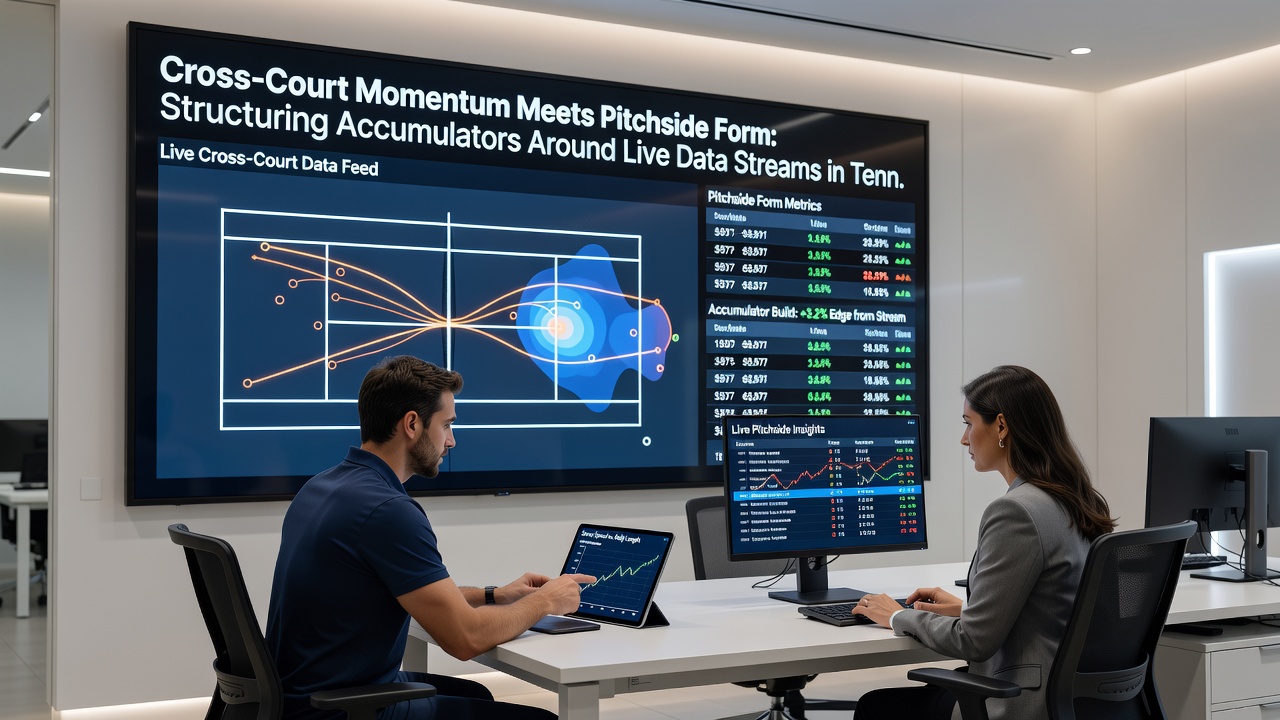
Software platforms now integrate these streams into unified interfaces that display correlation matrices between tennis point sequences and football scoring bursts. Figures from industry reports indicate increased usage of such combined tools during the 2026 season, particularly around Grand Slam events that coincide with league fixtures.
Geographic Variations in Data Application
European operators emphasize integration with UEFA and ATP official feeds, whereas Australian markets incorporate additional layers from local tennis and A-League tracking systems. Canadian regulatory frameworks encourage transparency in live data sourcing, which influences how accumulator tools present probability adjustments to users. These regional differences affect the granularity available for momentum calculations across tennis and football selections.
Case Examples from Tournament Overlaps
During June 2026 schedules, events such as the French Open finals overlapping with domestic league matches have prompted accumulator constructions that pair clay-court rally endurance metrics with pitch control statistics. One instance showed tennis players extending rallies beyond 12 shots correlating with football teams sustaining attacks in wide areas, prompting combined selections in accumulator formats. Observers documented these alignments through timestamped data logs that verified pattern persistence across both sports.
Technical Considerations for Stream Reliability
Accumulator platforms rely on redundant data sources to maintain accuracy when primary feeds experience latency. Redundant verification compares official tournament statistics against third-party sensor outputs, flagging discrepancies that could affect leg validity. This redundancy proves especially relevant during high-volume periods when multiple tennis courts and football pitches generate simultaneous updates.
Conclusion
Accumulator construction around live tennis and football data streams continues to evolve through refined integration of momentum indicators and form metrics. June 2026 schedules demonstrate how overlapping tournaments facilitate these combined approaches, supported by expanding access to synchronized data feeds from diverse geographic sources. Australian gambling research reports and analyses from the European Gaming Association provide further context on adoption patterns observed across markets.