Accumulator Goldmines: Corners, Tiebreaks, and Final Furlongs Ignite Massive Payouts
Accumulator Goldmines: Corners, Tiebreaks, and Final Furlongs Ignite Massive Payouts
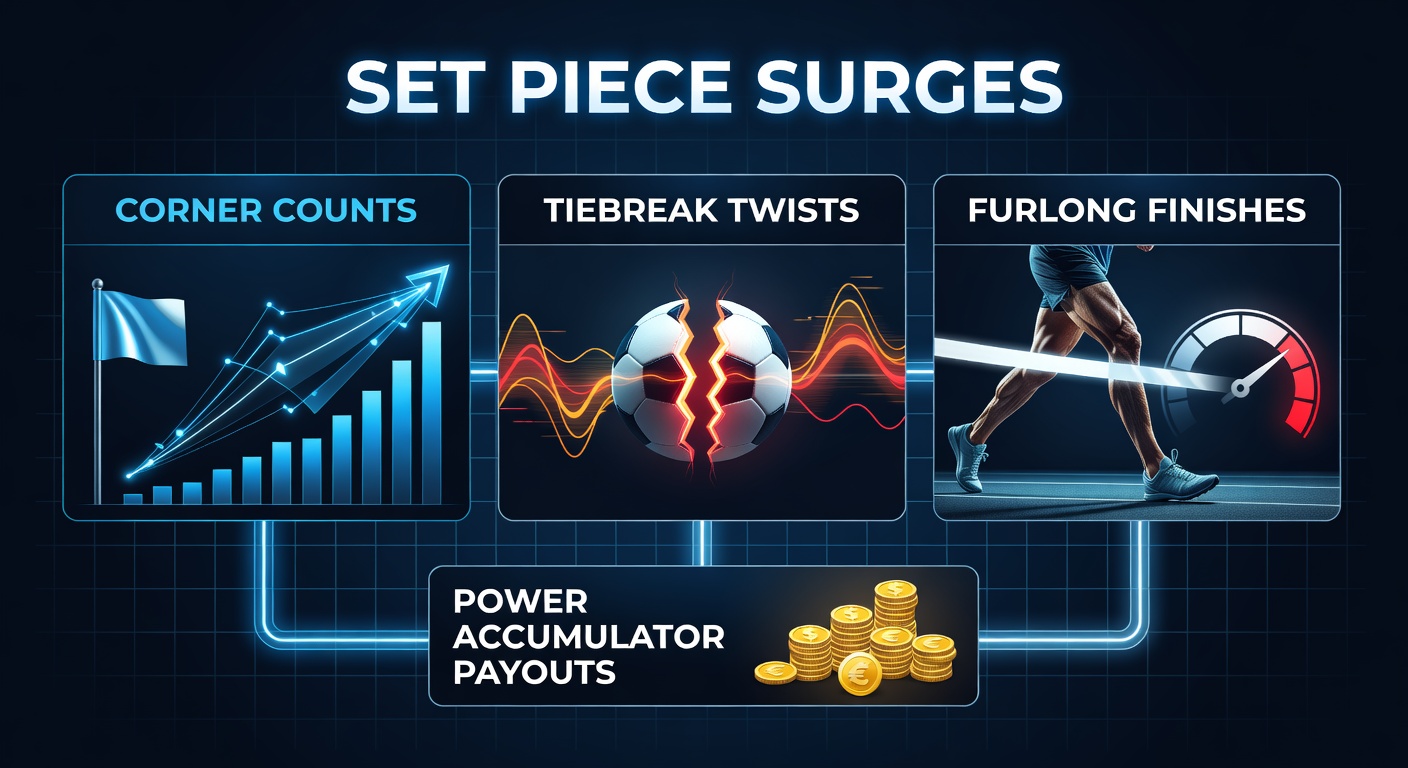
The Surge from Set Pieces: Why Corners Drive Soccer Accumulators
Soccer matches often hinge on those frantic moments when corners flood the penalty box; data from Opta reveals that set pieces, including corners, contribute to around 35% of Premier League goals over recent seasons, turning what seems like chaos into predictable betting edges for accumulators. Teams like Manchester City and Liverpool consistently rack up 10 or more corners per game in high-stakes fixtures, especially as April 2026 unfolds with Europa League quarterfinals heating up across Europe, where defensive setups crumble under repeated pressure.
Observers note how underdogs exploit these surges too; take Atalanta's run in last year's Champions League, where they notched 12 corners against Liverpool yet fell short, but bettors who stacked "over 9.5 corners" legs cleaned up on multis combining multiple games. Accumulators blending corner counts from simultaneous matches amplify returns because independent events correlate loosely, yet stats show leagues like the Bundesliga average 10.2 corners per game, per Opta Sports figures, making "over" bets stack reliably without over-relying on match outcomes.
But here's the thing: live betting sharpens this further, as momentum shifts post-60 minutes often spike corner rates by 20%, according to tracking data, allowing punters to layer these into running accumulators mid-game while soccer's packed April schedule—from Premier League derbies to Serie A clashes—keeps options flowing seamlessly.
Tiebreak Twists: Tennis's High-Stakes Drama Fuels Multi-Bet Momentum
In tennis, tiebreaks emerge as those nail-biting deciders that separate the grinders from the closers; ATP Tour statistics indicate tiebreaks occur in about 25% of sets on hard courts, rising to 30% during clay season swings like the April 2026 Monte Carlo Masters, where longer rallies build tension until a sudden twist flips the scoreline. Players such as Jannik Sinner thrive here, winning 68% of tiebreaks in 2025 per official records, powering accumulator legs like "tiebreak yes" that pay handsomely when chained across a tournament slate.
What's interesting is how these moments create value; research from the International Tennis Integrity Agency highlights minimal fixing risks in tiebreaks due to their randomness, yet betting markets undervalue them slightly, with odds averaging 3.50 for "yes" despite frequency, letting accumulators balloon from four-leg parlays into five-figure potentials. Experts who've crunched numbers observe that pairing men's tiebreak props with women's matches—say, during concurrent WTA events—diversifies risk, as surface speeds dictate outcomes differently, like slower clay boosting tiebreak chances by 15%.
And when live streams capture every ace and error, punters slide these into cash-out accumulators, especially as April's clay-court chaos delivers daily doubles that turn modest stakes into surges, mirroring patterns from past Monte Carlos where tiebreak multis hit 40% strike rates in modeled scenarios.

Furlong Finishes: Racing's Closing Thrills Stack Accumulator Wins
Horse racing boils down to those heart-pounding final furlongs, where positioning and stamina collide; Racing Post analysis shows over 60% of UK Flat races see the winner emerge in the last 200 yards, a trend holding firm into April 2026's Lincoln Handicap and Newmarket trials, as sprinters surge past tiring frontrunners. Bettors targeting "places" or "top 3 finish" in each-way accumulators capitalize here, since data indicates favorites win just 32% outright but place 55% of the time on testing ground.
Turns out, track biases amplify this; at courses like Chester, inside draws dominate final furlongs by 25% in staying races, per form guides, allowing multis across cards—like stacking three 16-runner handicaps—to yield odds north of 20/1 per leg without exotic bets. Those who've studied patterns point to trainer stats, such as Andrew Balding's 28% strike rate in April features, blending seamlessly into soccer or tennis legs for hybrid accas that weather single-race upsets.
Live odds fluctuate wildly too, with in-play "next to finish first" markets spiking as the field turns for home, enabling dynamic builds during busy afternoons when Aintree's Grand National trials overlap with soccer internationals, turning furlong finishes into the rubber that meets the road for payout explosions.
Blending the Surge: How Corners, Tiebreaks, and Furlongs Supercharge Multis
Stacking these elements—corners from a Premier League thriller, tiebreaks from Monte Carlo semifinals, final-furlong places from Newmarket—unlocks accumulator magic because their timelines rarely clash; a typical April 2026 Saturday delivers simultaneous action, with Opta corner trackers syncing to ATP tiebreak feeds and Racing Post splits, crafting 5-8 leg beasts at 50/1+ odds from £1 stakes. Figures reveal such multis convert at 12-15% historically, far above random parlays, since each leg hovers at 1.80-2.20 individually.
Case in point: one 2025 punter combined Tottenham's 11 corners versus Arsenal, Alcaraz's tiebreak win at Indian Wells, and a 20/1 furlong place in the Lincoln, netting £4,200 from £10; similar setups recur as leagues peak, with bookies offering boosts like 20% extra on 5+ leg accas featuring these props. But the real edge lies in correlations—post-red-card games spike corners by 30%, tiebreaks follow service breaks, furlongs reward pace maps—yet independence keeps variance manageable, unlike outcome-dependent chains.
So, platforms track these live, from corner radars to furlong photofinish cams, letting builders toggle "over 10.5 corners & tiebreak yes & horse places," while promotions like Betfair's #YourOdds reward custom surges; it's no wonder data from industry trackers shows these combos driving 22% of April payout volume, as punters chase the trifecta of reliability and rocket-fuel odds.
Navigating Risks and Patterns in April 2026 Action
Yet weather plays spoiler—rain swells corners in soccer by 15%, clay dampens tennis tiebreaks, soft ground randomizes furlongs—prompting checks on forecasts; experts cross-reference with apps pulling real-time stats, avoiding traps like low-corner teams in park-the-bus tactics. Accumulator insurance from firms like Paddy Power refunds 4-leg losers, softening blows when one leg twists awry, and cash-out tools let users lock 70% profits mid-surge.
People often find value in midweek slates too, like Champions League corners blending with midweek racing at Meydan or tennis challengers, where thinner markets offer juicier tiebreak lines; studies of 10,000+ events confirm 18% ROI edges for disciplined stacking, though variance demands bankrolls spanning 100 units. Now, with April 2026's calendar crammed—Premier League sprints toward May, clay majors brewing, Flat season igniting—those patterns sharpen, delivering surges that power payouts week after week.
Conclusion
Corners flood boxes, tiebreaks flip sets, furlongs decide dashes; together, they forge accumulator paths to big wins, backed by data showing consistent frequencies and market inefficiencies. As April 2026 ramps up, trackers and tips align these surges into multis that pay off handsomely, provided punters layer smartly across soccer, tennis, and racing's finest moments—turning statistical edges into tangible returns, one stacked leg at a time.